Mobile imaging
Mobile MRI units — sold, sited, and serviced.
Road-ready 1.5T mobile MRI trailers for interim or permanent capacity, anywhere in Canada. We handle the magnet, chiller, HVAC, and site power as one system — because that's how they fail.
Sales & service
One system, not four vendors.
A mobile MRI is a scanner, a chiller, an HVAC plant, and a power system sharing one trailer. When one vendor owns the magnet and another owns the trailer, downtime falls in the gap between them. We own the whole problem:
- Unit sales — road-ready 1.5T trailers, inspected and certified before delivery
- Site preparation — pad spec, shore power, connectivity, patient access verified pre-arrival
- Trailer systems — chiller, HVAC, generator and shore-power integration
- Magnet care on the road — helium management, ride-induced coil and connector wear
Who runs mobile
Hospitals bridging a fixed-suite renovation, regional health authorities sharing capacity between sites, and clinics that need MRI volume without MRI construction.
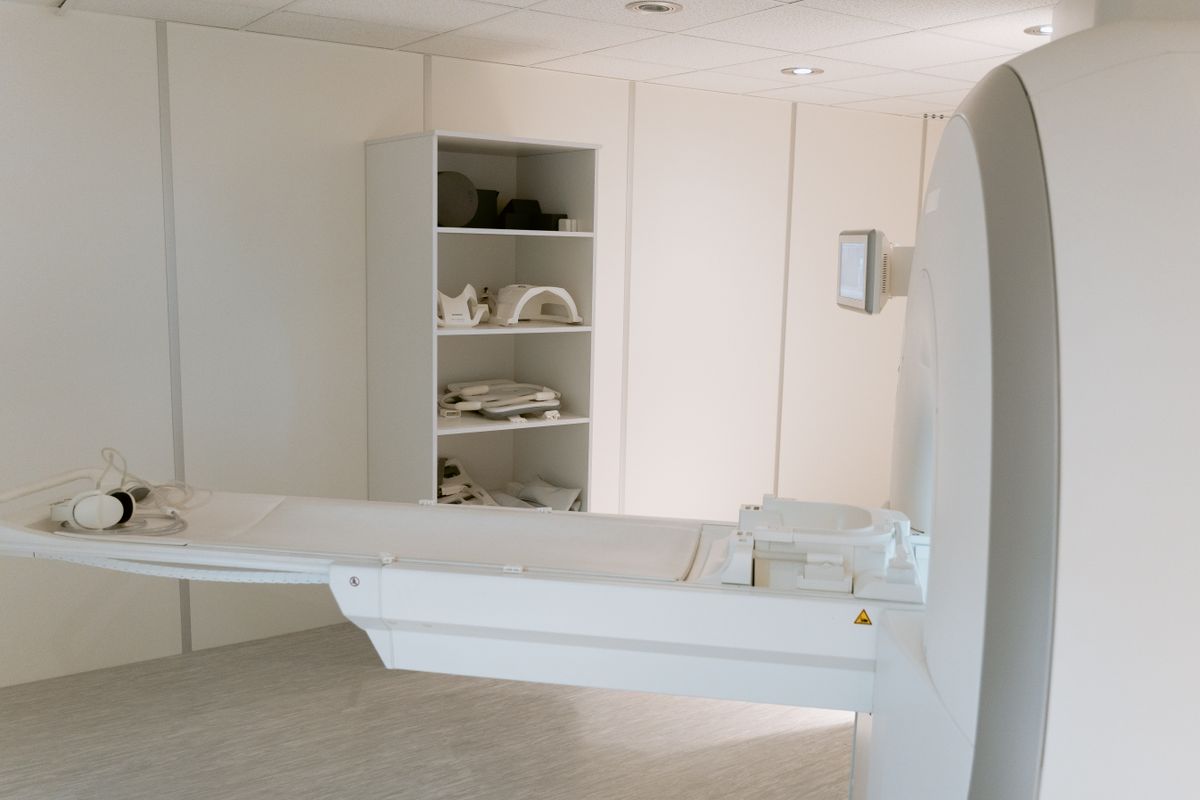
| Item | Detail |
|---|---|
| Field strength | 1.5T superconducting |
| Configuration | Self-contained trailer — scan room, control room, equipment bay |
| Deployment | Scanning within days of arrival with site pad and power ready |
| Service | Same 24-hour emergency response as fixed sites |
Common questions
Mobile MRI questions.
When does a mobile MRI unit make sense?
Three common cases: interim capacity while a fixed suite is built or renovated, permanent capacity for sites without space for a fixed magnet, and shared service between facilities. A mobile unit can be scanning within days of arrival if site power and pad are ready.
What does mobile MRI servicing involve?
Everything a fixed MRI needs, plus the trailer systems that most often cause downtime: chiller and HVAC performance, generator and shore-power integration, ride-induced coil and connector wear, and helium management in a moving environment.
Do you prepare the site for a mobile MRI?
Yes. We verify pad spec, shore power, data connectivity, and patient access routing before delivery — the four items that most often delay first-scan day.